Filter by
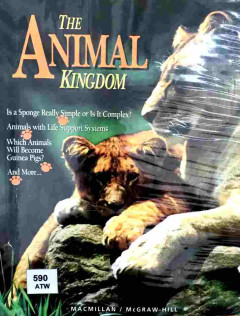
The Animal kingdom
Throughout history, people have been fascinated by animals. Animal life is found in almost every environment on earth. Each animal contributes to the environment and has a specific role there. Humans are only one of the many species, or kinds, of animals. By studying animals, you can discover how you fit into the network of living things that coexist on Earth.
- Edition
- -
- ISBN/ISSN
- 9780022761264
- Collation
- 122 pages : illustration ; 25 cm
- Series Title
- -
- Call Number
- 590 ATW

Trees
Trees are described and defined, their growth is explored, and their special features and uses are presented in an engaging and accessible way. Science curricula calling for the understanding of plant and flower parts and growth are matched.
- Edition
- -
- ISBN/ISSN
- 9781404235717
- Collation
- 24 pages : illustration ; 23 cm
- Series Title
- See How Plants Grow
- Call Number
- 582 EDW

Don't hit me!
When best friends get mad over a game of chess, one strikes out and the other reminds him that they should use their words, not their fists, when they disagree.
- Edition
- -
- ISBN/ISSN
- 9780439568609
- Collation
- 32 pages : illustration ; 22 cm
- Series Title
- -
- Call Number
- F

Flowers
Flowers are described and defined, their growth is explored, and their special features and uses are presented in an engaging and accessible way. Science curricula calling for the understanding of plant and flower parts and growth are matched.
- Edition
- -
- ISBN/ISSN
- 9781404236998
- Collation
- 24 pages : illustration ; 23 cm
- Series Title
- See How Plants Grow
- Call Number
- 582 EDW
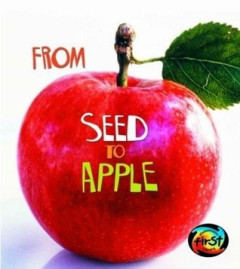
From seed to apple
This series of books looks at the life cycles of familiar animals and plants. Question boxes throughout the text encourage children to make predictions about what is coming up in the text.
- Edition
- -
- ISBN/ISSN
- 9781403478627
- Collation
- 32 pages : illustration ; 22 cm
- Series Title
- How living things grow
- Call Number
- 583 GAN

A seed in need : a first look at the plant cycle
Aimed at young children, this work presents the story about the growth of a plant from seed to full flowering through the characters of an inquisitive ladybird and snail. A colorful parade of insects follow the progress of a sunflower seed in this first look at the life cycle of a sunflower.
- Edition
- -
- ISBN/ISSN
- 9780750024976
- Collation
- 31 pages : illustration ; 20 cm
- Series Title
- Little Bees
- Call Number
- 580 GOD

How do plants grow?
One of a series of titles covering the Key Stage 1 curriculum on plants. Topics covered include habitats, classification, growth and reproduction.
- Edition
- -
- ISBN/ISSN
- 9780431018096
- Collation
- 32 pages : illustration ; 21 cm
- Series Title
- World of plants
- Call Number
- 580 SPI
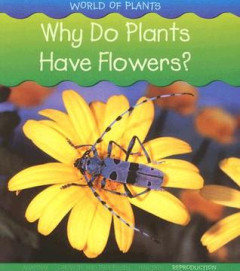
Why do plants have flowers?
What are flowers for ? Lots of plants grow bright, colorful flowers. Flowers make seeds. Seeds grow into new plants. Plants and animals have young that grow up to be like them. This is called reproduction. Cats have kittens, birds lay eggs, and most plants make seeds.
- Edition
- -
- ISBN/ISSN
- 9781403473639
- Collation
- 32 pages : illustration ; 22 cm
- Series Title
- World of plants
- Call Number
- 582 SPI

School day!
I wave I build I read I write I swing I paint I listen I wave
- Edition
- -
- ISBN/ISSN
- 9780439533539
- Collation
- 9 pages : illustration ; 20 cm
- Series Title
- -
- Call Number
- C

The tiny seed
In autumn, a strong wind blows flower seeds high in the air and carries them far across the land. One by one, many of the seeds are lost -- burned by the sun, fallen into the ocean, eaten by a bird. But some survive the long winter and, come spring, sprout into plants, facing new dangers -- trampled by playing children, picked as a gift for a friend. Soon only the tiniest seed remains, growing …
- Edition
- -
- ISBN/ISSN
- 014055713X
- Collation
- 32 pages : illustration ; 28 cm
- Series Title
- -
- Call Number
- C
 Computer Science, Information & General Works
 Philosophy & Psychology
 Religion
 Social Sciences
 Language
 Pure Science
 Applied Sciences
 Art & Recreation
 Literature
 History & Geography