Filter by

Paper, paper everywhere
Briefly discusses where paper comes from, how it is made, and how we use it. This colorful picture book takes children step-by-step through the papermaking process.
- Edition
- -
- ISBN/ISSN
- 0152594884
- Collation
- 32 pages : illustration : 21 cm
- Series Title
- -
- Call Number
- 620.1 GIB

From tree to paper
This work is part of an illustrated activities series which describes how popular, everyday objects are made. In this particular book, children discover the stages by which paper is grown and produced. The book is designed for cross-curricular work in science and technology.
- Edition
- -
- ISBN/ISSN
- 075001069X
- Collation
- 29 pages : illustration ; 24 cm
- Series Title
- Taking Shape
- Call Number
- 620.1 BAX

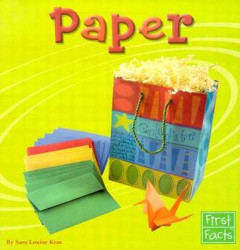
Paper
Describes how paper is produced and examines it many uses. Why do we use paper to make tissues? This series looks at the way we use materials to make the things we need in everyday life. It shows how the materials properties make them useful.
- Edition
- -
- ISBN/ISSN
- 9781599200040
- Collation
- 30 pages : illustration ; 27 cm
- Series Title
- How We Use Materials
- Call Number
- 620.1 WAL
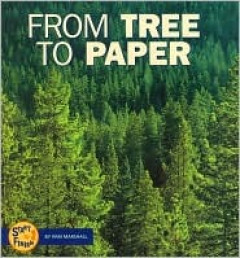
From tree to paper
How is paper made? Tall, thick trees are cut down, chopped into tiny pieces to make pulp, and rolled flat into giant rolls of paper. After the rolls are cut into smaller pieces, the paper is sent to stores and printers to be used by people.
- Edition
- -
- ISBN/ISSN
- 9780822507208
- Collation
- 24 pages : illustration ; 19 cm
- Series Title
- -
- Call Number
- 620.1 MAR

Trees to paper
Paper is made from trees. To see the cycle, read this informative book. Provide Children with a fun and exciting introduction to reading about the people, places, and things in their world.
- Edition
- -
- ISBN/ISSN
- 0516244531
- Collation
- 24 pages : illustration ; 15 cm
- Series Title
- Welcome Books
- Call Number
- 620.1 SNY

The legend of rock paper scissors
You’ve played the game. Now read the legend of how it all began . . . Long ago, in an ancient and distant realm called the Kingdom of Backyard, there lived a warrior named ROCK. Meanwhile in the Empire of Mom’s Home Office, a second great warrior sought the glory of battle. And his name was PAPER. At the same time, in the Kitchen Realm, in the tiny village of Junk Drawer, lived a t…
- Edition
- -
- ISBN/ISSN
- 9780062438898
- Collation
- 48 pages : illustration ; 28 cm
- Series Title
- -
- Call Number
- D
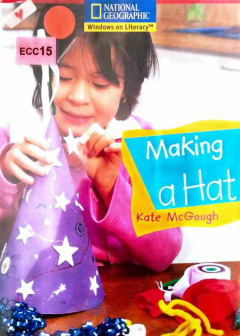
Making a hat
Think and discuss: What do you use to make a hat?
- Edition
- -
- ISBN/ISSN
- 9781740650212
- Collation
- 8 pages : illustration ; 20 cm
- Series Title
- National Geographic Windows on Literacy
- Call Number
- ECC15

Dreams
Roberto is excited about the paper mouse he made in school, until Amy asks, "Does it do anything?" Roberto isn't sure, so he leaves the mouse on his window sill and goes to bed. Before long his apartment building is quiet, but Roberto can't fall asleep. So he gets up to look out the window and sees Archie's cat being chased by a big, snarling dog! Roberto doesn't know what to do, but fate steps…
- Edition
- -
- ISBN/ISSN
- 051488007999
- Collation
- 32 pages : illustration ; 25 cm
- Series Title
- -
- Call Number
- KE

The paperboy
A quiet mood piece that depicts the bond between a paperboy and his dog. Human and canine both struggle to rouse themselves, eat breakfast from bowls, and have an intimate knowledge of their route. Pilkey paints their shared experiences with a graceful economy of language.
- Edition
- -
- ISBN/ISSN
- 0531071391
- Collation
- 32 pages : illustration ; 26 cm
- Series Title
- -
- Call Number
- P
 Computer Science, Information & General Works
  Philosophy & Psychology
  Religion
  Social Sciences
  Language
  Pure Science
  Applied Sciences
  Art & Recreation
  Literature
  History & Geography