Filter by
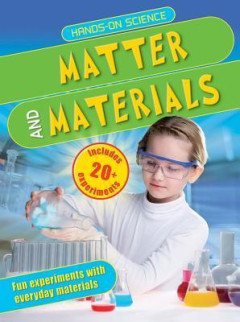
Matter and materials : fun experiments with everyday materials
These giant books containing exciting projects and experiments take a hands-on approach to science concepts. Hundreds of simple and easy experiments explore the various scientific principles behind natural phenomena like friction, centrifugal force, and the underlying laws of physics that help make machines work. These fun yet practical experiments make it easy for anyone to become a rocket sci…
- Edition
- -
- ISBN/ISSN
- 9780753469736
- Collation
- 32 pages : illustration : 25 cm
- Series Title
- Hands-On Science
- Call Number
- 507 MEL

Rocks and stones
Describes the different ways humans use rocks and stones in everyday life and discusses the ways they are retrieved from the earth for these uses.
- Edition
- -
- ISBN/ISSN
- 9781599200064
- Collation
- 30 pages : illustration ; 27 cm
- Series Title
- How We Use Materials
- Call Number
- 552 STO
Materials
This popular series introduces simple science topics using everyday situations and objects that readers can recognize in the world around them. Activities and questions are presented to encourage active thinking about the concepts. The new edition features updated text and photographs and more captions and labels to support the presentation of key ideas.
- Edition
- -
- ISBN/ISSN
- 9781432914370
- Collation
- 32 pages : illustration : 22 cm
- Series Title
- My World Of Science
- Call Number
- 620.1 ROY

How we use plants for shelter
Plants are made into materials used to build both the exterior and interior of different kinds of shelters. Some of these materials are wood, timber, straw, and bamboo; and paint, flooring and walls. Readers also learn how to build a model hut!
- Edition
- -
- ISBN/ISSN
- 9781404244221
- Collation
- 32 pages : illustration : 27 cm
- Series Title
- How We Use Plants
- Call Number
- 690 MOR

Is it smooth or rough?
Discusses the properties of matter pertaining to whether an object is smooth or rough, defining both words and using examples to illustrate the differences. Why is your desk smooth? Why is sandpaper rough? What is friction? This engaging title invites curious readers to discover the answers to these questions. Vibrant photographs and accessible text encourage readers to investigate how smooth a…
- Edition
- -
- ISBN/ISSN
- 9780778720515
- Collation
- 24 pages : illustration ; 20 cm
- Series Title
- What's the Matter?
- Call Number
- 620.1 RIS
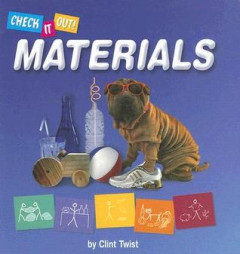
Materials
Our everyday lives are filled with exciting materials. In this introduction to physical science, young readers will explore common materials, such as wood, paper, stone, and more. Children will discover the source of materials, while exploring their common characteristics and uses. Accessible scientific language explains basic concepts, as a series of simple questions encourage children to find…
- Edition
- -
- ISBN/ISSN
- 9781597160599
- Collation
- 24 pages : illustration ; 21 cm
- Series Title
- Check It Out!
- Call Number
- 620.1 TWI

Changing materials : fire and ice
Changing Materials: Bang! Snap! Crackle!: Looks at the difference between natural and manufactured materials and looks at the ways in which materials can be changed, e.g. squashing, heating. Introduces words such as: melting, freezing, boiling Growth & Life Cycles: Tadpole to Frog: Looks at how animals reproduce and grow, using examples from life cycles of frog, bird and insect. Introduces word…
- Edition
- -
- ISBN/ISSN
- 9780749675264
- Collation
- 32 pages : illustration ; 23 cm
- Series Title
- Reading About Starters
- Call Number
- 620.1 PIP
Materials
Illustrated with colour images, the books in this series encourage children to understand the science behind everyday objects and events. Written for children working at Key Stage 1, they fit into the schemes of work of the National Curriculum.
- Edition
- -
- ISBN/ISSN
- 1842343378
- Collation
- 24 pages : illustration ; 25 cm
- Series Title
- Start-Up Science
- Call Number
- 620.1 LLE
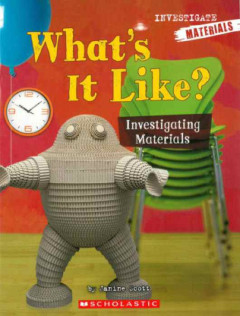
What's it like? : investigating materials
Stretchy, smooth, or strong! What are materials like? Find out how they can change. Where do different materials come from? Which materials do people use to build their homes? What do different materials have in common.
- Edition
- -
- ISBN/ISSN
- 9780545148894
- Collation
- 28 pages : illustration ; 21 cm
- Series Title
- Investigate Materials
- Call Number
- 620.1 SCO

 Computer Science, Information & General Works
 Philosophy & Psychology
 Religion
 Social Sciences
 Language
 Pure Science
 Applied Sciences
 Art & Recreation
 Literature
 History & Geography