Filter by

Wood
Each book in the "Giraffe Books" series focuses on a different aspect of our everyday world, encouraging children to look more closely at their surroundings and helping them to make sense what they see. This book looks at wood.
- Edition
- -
- ISBN/ISSN
- 0340503912
- Collation
- 25 pages : illustration ; 21 cm
- Series Title
- Giraffe Books
- Call Number
- 620.1 PET


Is it smooth or rough?
Discusses the properties of matter pertaining to whether an object is smooth or rough, defining both words and using examples to illustrate the differences. Why is your desk smooth? Why is sandpaper rough? What is friction? This engaging title invites curious readers to discover the answers to these questions. Vibrant photographs and accessible text encourage readers to investigate how smooth a…
- Edition
- -
- ISBN/ISSN
- 9780778720515
- Collation
- 24 pages : illustration ; 20 cm
- Series Title
- What's the Matter?
- Call Number
- 620.1 RIS
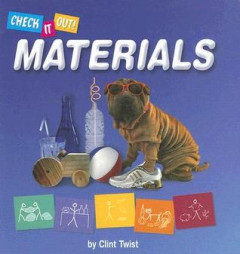
Materials
Our everyday lives are filled with exciting materials. In this introduction to physical science, young readers will explore common materials, such as wood, paper, stone, and more. Children will discover the source of materials, while exploring their common characteristics and uses. Accessible scientific language explains basic concepts, as a series of simple questions encourage children to find…
- Edition
- -
- ISBN/ISSN
- 9781597160599
- Collation
- 24 pages : illustration ; 21 cm
- Series Title
- Check It Out!
- Call Number
- 620.1 TWI

Changing materials : fire and ice
Changing Materials: Bang! Snap! Crackle!: Looks at the difference between natural and manufactured materials and looks at the ways in which materials can be changed, e.g. squashing, heating. Introduces words such as: melting, freezing, boiling Growth & Life Cycles: Tadpole to Frog: Looks at how animals reproduce and grow, using examples from life cycles of frog, bird and insect. Introduces word…
- Edition
- -
- ISBN/ISSN
- 9780749675264
- Collation
- 32 pages : illustration ; 23 cm
- Series Title
- Reading About Starters
- Call Number
- 620.1 PIP
Our digestion system
Talks About Food, Where It Goes When You Eat, And The Food Your Body Needs For Health And Energy. A simple introduction to why the body needs food and how it passes through the digestive tract.
- Edition
- -
- ISBN/ISSN
- 9781600445101
- Collation
- 24 pages : illustration ; 20 cm
- Series Title
- -
- Call Number
- 612.3 THA

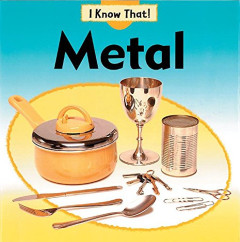
Metal
One of a series of non-fiction books for children working at Key Stage One, this book looks at the properties of metal, familiar things that are made from metal and where the material comes from.
- Edition
- -
- ISBN/ISSN
- 1932889523
- Collation
- 24 pages : illustration ; 22 cm
- Series Title
- I Know That!
- Call Number
- 620.1 LLE
From tree to paper
How is paper made? Tall, thick trees are cut down, chopped into tiny pieces to make pulp, and rolled flat into giant rolls of paper. After the rolls are cut into smaller pieces, the paper is sent to stores and printers to be used by people.
- Edition
- -
- ISBN/ISSN
- 9780822507208
- Collation
- 24 pages : illustration ; 19 cm
- Series Title
- -
- Call Number
- 620.1 MAR

 Computer Science, Information & General Works
 Philosophy & Psychology
 Religion
 Social Sciences
 Language
 Pure Science
 Applied Sciences
 Art & Recreation
 Literature
 History & Geography