Filter by
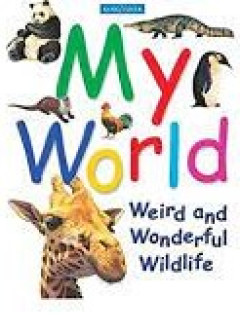
My world : Weird and wonderful wildlife
Designed to help today's youngsters find the answers to many of their questions about animals, this book has many fun and intuitive join-in activities and simple experiments that encourage participation and learning. Full-color illustrations.
- Edition
- -
- ISBN/ISSN
- 0753454246
- Collation
- 95 pages : illustration ; 27 cm
- Series Title
- -
- Call Number
- 590 MY

A tree is nice
"Trees are very nice," says Janice May Udry in her first book for children. She goes on to explain that even one tree is nice, if it is the only one you happen to have. Some of the reasons why trees are so good to have around are funny. Some are indisputable facts. But in all of them there is a sense of poetic simplicity and beauty which will be sure to entrance any young child. Whether he k…
- Edition
- -
- ISBN/ISSN
- 9780064431477
- Collation
- 32 pages : illustration ; 27 cm
- Series Title
- -
- Call Number
- 582 UDR
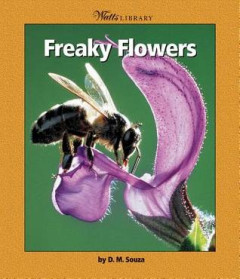
Freaky flowers
This series is the definitive collection of informational books for intermediate -- middle grade readers. Watts Library TM spans all subjects, including animals, space, American Indians, U.S. history, geography, cutting-edge sports, and more!
- Edition
- -
- ISBN/ISSN
- 9780531162217
- Collation
- 63 pages : illustration ; 23 cm
- Series Title
- Watts Library
- Call Number
- 582.1 SOU

How do plants grow?
One of a series of titles covering the Key Stage 1 curriculum on plants. Topics covered include habitats, classification, growth and reproduction.
- Edition
- -
- ISBN/ISSN
- 9780431018096
- Collation
- 32 pages : illustration ; 21 cm
- Series Title
- World of plants
- Call Number
- 580 SPI
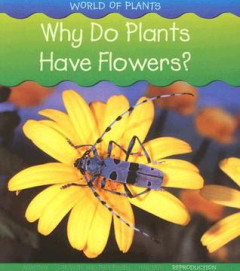
Why do plants have flowers?
What are flowers for ? Lots of plants grow bright, colorful flowers. Flowers make seeds. Seeds grow into new plants. Plants and animals have young that grow up to be like them. This is called reproduction. Cats have kittens, birds lay eggs, and most plants make seeds.
- Edition
- -
- ISBN/ISSN
- 9781403473639
- Collation
- 32 pages : illustration ; 22 cm
- Series Title
- World of plants
- Call Number
- 582 SPI
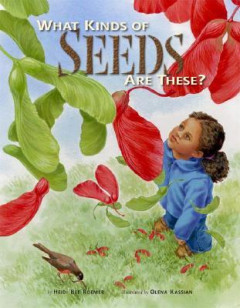
What kinds of seeds are these?
A perfect companion to NorthWord's WHAT DO ROOTS DO?, this spirited text enumerates in riddle-form the many ways different kinds of seeds travel, whether by helicopter or rolling in the wind as a tumbleweed. Fun activities are included at the end to help readers discover the world of seeds up close. Gorgeous illustrations of seeds and plants and children enjoying them leap from the pages.
- Edition
- -
- ISBN/ISSN
- 9781559719551
- Collation
- 30 pages : illustration ; 28 cm
- Series Title
- -
- Call Number
- 581.4 ROE
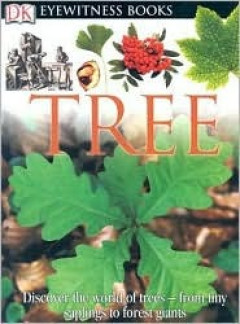
Tree
Full-color photos. "Here is everything readers will ever desire to know about trees. Every imaginable aspect of the life of a tree is examined. Anatomy, physiology, reproduction, growth, and development are described using the best photos in botanical literature and succinct, lively captions. Each page is a delight to the eye. Of particular note is the coverage of tree diseases, including acid …
- Edition
- -
- ISBN/ISSN
- 9780756610937
- Collation
- 72 pages : illustration ; 27 cm
- Series Title
- Dorling Kindersley Eyewitness Books
- Call Number
- 582 BUR
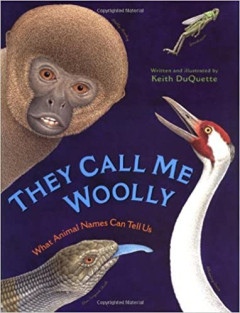
They call me Woolly : what animal names can tell us
From the woolly monkey to the woolly bear, from the blue-tongued skink to the blue marlin, there's so much to discover in an animal's name. An animal's name can tell you where the animal is from, like the African elephant. Its name can also tell you what the animal eats, like the rat snake, or what it looks like, such as the walking stick, or even what it sounds like, such as the whooping crane…
- Edition
- -
- ISBN/ISSN
- 9780439805650
- Collation
- 31 pages : illustration ; 27 cm
- Series Title
- -
- Call Number
- 590 DUQ
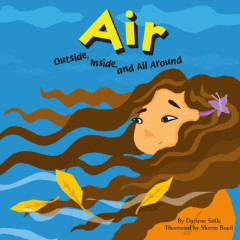
Air : outside, inside, and all around
Learn about the air around you, and find out about oxygen, the atmosphere, gases, and pollution.
- Edition
- -
- ISBN/ISSN
- 9781404802483
- Collation
- 24 pages : illustration ; 26 cm
- Series Title
- -
- Call Number
- 533 STI
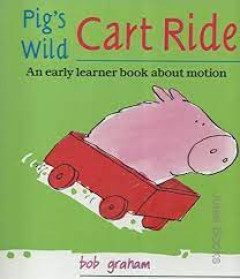
Pig's wild cart ride : an early learner book about motion
A pig in a cart demonstrates that an object moves until it is stopped, accompanied by four basic experiments at the end
- Edition
- -
- ISBN/ISSN
- 9780831709327
- Collation
- 12 pages : illustration ; 26 cm
- Series Title
- -
- Call Number
- 531 GRA
 Computer Science, Information & General Works
  Philosophy & Psychology
  Religion
  Social Sciences
  Language
  Pure Science
  Applied Sciences
  Art & Recreation
  Literature
  History & Geography