Filter by
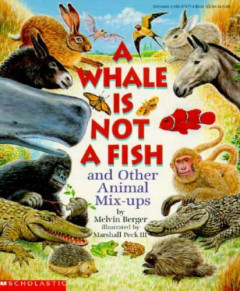
A whale is not a fish and other animal mix-ups
Clarifying common misconceptions about animals, such as the differences between alligators and crocodiles, an introduction to animal traits explains how scientific classifications are made. Reprint.
- Edition
- -
- ISBN/ISSN
- 9780590474771
- Collation
- 64 pages : illustration ; 22 cm
- Series Title
- -
- Call Number
- 590 BER

From tadpole to frog
Discover how a tadpole grows into a frog. This title explains animal growth in a clear and organized manner. Readers will love watching the transformations take place.
- Edition
- -
- ISBN/ISSN
- 9781403478597
- Collation
- 32 pages : illustration ; 22 cm
- Series Title
- -
- Call Number
- 597.8 GAN

60 amazing and curious facts about space
Have you ever thought about how incredible about our universe? By lifting up these flaps, you will learn many curious and amazing facts about stars, planets and travelling outer space.
- Edition
- -
- ISBN/ISSN
- 9789887985259
- Collation
- 13 pages : illustration ; 27 cm
- Series Title
- Lift-A-Flap Book
- Call Number
- 523.1 ABE
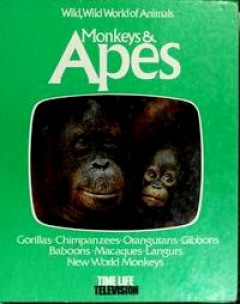
Monkeys & apes : based on the television series Wild wild world of animals
Introduces members of the primate order, discussing their evolution, physical characteristics, social behavior, and living environments.
- Edition
- -
- ISBN/ISSN
- 0913948039
- Collation
- 127 pages : illustration ; 27 cm
- Series Title
- Wild, Wild world of animals
- Call Number
- 599.8 NAP

Orangutans
Introduce readers to a world beyond their backyard. With large, vibrant photographs, this series lures readers into the exciting lives of wild animals. In the Wild reaches around the globe--from the deep-sea home of dolphins to the frigid territory of the polar bear-in a fascinating exploration of the life cycles, food gathering and hunting habits, basic survival, and family and social structur…
- Edition
- -
- ISBN/ISSN
- 9780750242318
- Collation
- 32 pages : illustration : 22 cm
- Series Title
- In to wild
- Call Number
- 599.8 KEN

I like monkeys because.....
One of a new series of books, Read and Discover, designed to encourage children to learn about the world as they learn to read. Watch them leap and swing and bathe and play. Everyone likes monkeys! Monkeys are everywhere. They come in all shapes and sizes and do all sorts of interesting things. Hansard takes young readers on a dawn-to-dusk tour of monkeys and apes throughout the world. Patrici…
- Edition
- -
- ISBN/ISSN
- 9780744518573
- Collation
- 28 pages : illustration ; 25 cm
- Series Title
- Read and wonder
- Call Number
- 599.8 HAN
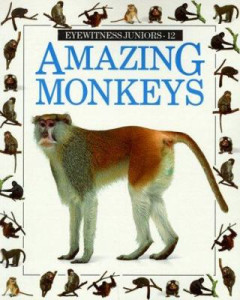
Amazing monkeys
Full-color photos & full-color illus. Here are monkeys that chew gum, monkeys that fish for crabs, and monkeys susceptible to sunburn in a fact-filled overview of these funny, furry creatures.
- Edition
- -
- ISBN/ISSN
- 9780863185472
- Collation
- 29 pages : illustration ; 24 cm
- Series Title
- Amazing Worlds
- Call Number
- 599.8 STE

The monkey and the ape : close relatives
An introduction to the world of monkeys and apes, discussing appearance, habitat, behavior, diet, threats to their survival, and efforts to protect them. Part of a series on animals and animal behaviour, produced in collaboration with the makers of the award-winning television programme Survival, and aiming to introduce children to the animal kingdom. This book covers the natural history of ape…
- Edition
- -
- ISBN/ISSN
- 9781852833312
- Collation
- 32 pages : illustration : 25 cm
- Series Title
- Junior survival library
- Call Number
- 599.8 PEN
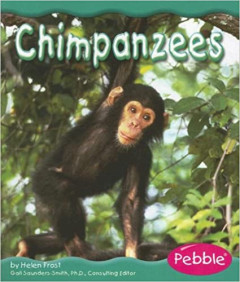
Chimpanzees
Text and photographs introduce the physical characteristics and behavior of chimpanzees that live in tropical rain forests.
- Edition
- -
- ISBN/ISSN
- 9780736896085
- Collation
- 24 pages : illustration ; 17 cm
- Series Title
- -
- Call Number
- 599.8 FRO

Monkeys and apes
Monkey and apes belong to a fascinating group of animals called primates. Zoologists organize animals into various groups according to how many things they have in common. For example, all animals which have fur, are warm blooded and feed their young on milk, are classed as mammals. The mammal class is then divided into smaller groups called orders, such as the carnivore order (which includes d…
- Edition
- -
- ISBN/ISSN
- 9780792450313
- Collation
- 32 pages : illustration : 27 cm
- Series Title
- Oxford Scientific Films
- Call Number
- 599.8 RED
 Computer Science, Information & General Works
  Philosophy & Psychology
  Religion
  Social Sciences
  Language
  Pure Science
  Applied Sciences
  Art & Recreation
  Literature
  History & Geography