Filter by

Can it rain cats and dogs? : questions and answers about weather
This book will answer children's questions about weather as it explores the basics in beautifully illustrated sections on sun, air, and wind; rain, snow, and hail; and wild weather like hurricanes and tornadoes. The questions and answers should help to appease even the most curious child's need to know why the weather keeps changing, what happens to puddles after it rains, if you can smell the …
- Edition
- -
- ISBN/ISSN
- 9780439085731
- Collation
- 48 pages : illustration ; 20 cm
- Series Title
- -
- Call Number
- 551.6 BER
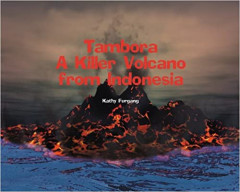
Tambora : a killer volcano from Indonesia
The power of a volcanic eruption is one of nature's most dangerous forces. From the beginning of recorded time, volcanoes have continually changed Earth's surface and weather patterns. Each of these books, which are written to accompany and enhance an earth science curriculum, describes the composition of planet Earth, the different types of volcanoes, and the geologic events that bring about a…
- Edition
- -
- ISBN/ISSN
- 9780329581473
- Collation
- 24 pages : illustration ; 20 cm
- Series Title
- -
- Call Number
- 551.2 FUR
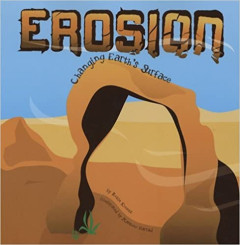
Erosion : changing Earth's surface
Did you know that rain, waves, wind, snow, and ice can change the shape of Earth’s surface? They can create valleys, sea stacks, caves, and rock arches. Learn about the natural forces of erosion and how they shape the land.
- Edition
- -
- ISBN/ISSN
- 9781404821958
- Collation
- 24 pages : illustration ; 26 cm
- Series Title
- -
- Call Number
- 551.3 KOO
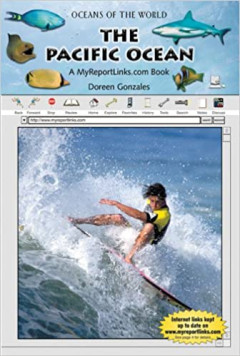
The Pacific Ocean
Describes the physical characteristics, plant and animal life, explorers, and environmental problems of the world's largest ocean, the Pacific and includes Internet links to web sites related to oceans.
- Edition
- -
- ISBN/ISSN
- 9780766051928
- Collation
- 48 pages : illustration ; 23 cm
- Series Title
- Ocean of the world
- Call Number
- 551.46 GON
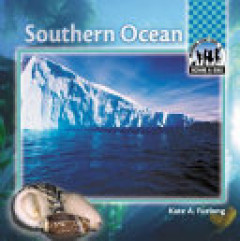
Southern Ocean
Provides information about the newly delineated ocean that surrounds the continent of Antarctica.
- Edition
- -
- ISBN/ISSN
- 9781577659914
- Collation
- 24 pages : illustration ; 20 cm
- Series Title
- Ocean & seas
- Call Number
- 551.46 FUR
Underwater exploration
- Edition
- -
- ISBN/ISSN
- 9780531166840
- Collation
- 78 pages : illustration ; 21 cm
- Series Title
- The reastless sea
- Call Number
- 551.46 VOG
- Edition
- -
- ISBN/ISSN
- 9780531166840
- Collation
- 78 pages : illustration ; 21 cm
- Series Title
- The reastless sea
- Call Number
- 551.46 VOG

Oceans
Earth's oceans cover 70 per cent of its surface, and in this book you will find all you need to know about how they were formed and what they contain, the special characteristics of ocean wildlife both in shallow, sunlit water and in the dark depths, the effects of ocean currents, and how people use and abuse ocean resources. 'Location files' are mini case studies that focus on places with a pa…
- Edition
- -
- ISBN/ISSN
- 9781583404270
- Collation
- 48 pages : illustration ; 28 cm
- Series Title
- Geography Fact files
- Call Number
- 551.46 WOO
Rocks and minerals
- Edition
- -
- ISBN/ISSN
- 1561731072
- Collation
- 44 pages : illustration ; 30 cm
- Series Title
- Discover
- Call Number
- 552 ARE
- Edition
- -
- ISBN/ISSN
- 1561731072
- Collation
- 44 pages : illustration ; 30 cm
- Series Title
- Discover
- Call Number
- 552 ARE

Weather words and what they mean
- Edition
- -
- ISBN/ISSN
- 0590444085
- Collation
- 32 pages : illustration : 20 cm
- Series Title
- -
- Call Number
- 551.6 GIB
- Edition
- -
- ISBN/ISSN
- 0590444085
- Collation
- 32 pages : illustration : 20 cm
- Series Title
- -
- Call Number
- 551.6 GIB
 Computer Science, Information & General Works
  Philosophy & Psychology
  Religion
  Social Sciences
  Language
  Pure Science
  Applied Sciences
  Art & Recreation
  Literature
  History & Geography