Filter by

World cultures
'Investigate' encourages geographical enquiry with an interactive, investigative, and visual approach to a wide range of core curriculum topics. Each book uses a fun, interactive puzzle approach that gives children a chance to consider knowledge they already have and build on it.
- Edition
- -
- ISBN/ISSN
- 9781432934712
- Collation
- 32 pages : illustration : 19 cm
- Series Title
- Investigate
- Call Number
- 306 SPI

Caps, hats, socks, and mittens : a book about the four seasons
A host of season-specific images and activities include steaming mugs of cocoa, fall leaves, sleigh-riding, running in the rain, playing baseball, and trick-or-treating.
- Edition
- -
- ISBN/ISSN
- 0590448722
- Collation
- 32 pages : illustration : 22 cm
- Series Title
- -
- Call Number
- 508 BOR
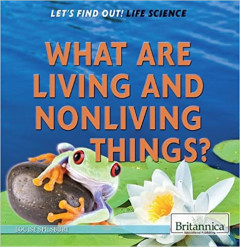
What are living and nonliving things?
Key biological terms are defined in a way that all readers can understand in this book that explains the essential concepts of life processes and how living and nonliving things relate to each other. The basics of feeding, respiration, waste, and reproduction, among other important activities that sustain living things, are explained in clear, simple language, with colorful photographs to illus…
- Edition
- -
- ISBN/ISSN
- 9781622752263
- Collation
- 32 pages : illustration : 21 cm
- Series Title
- Let's Find Out! Life Science
- Call Number
- 570 SPI
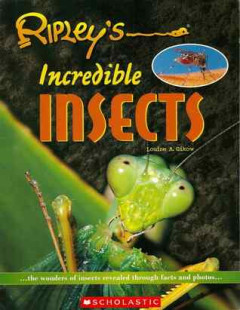
Ripley's incredible insects
The wonders of insects revealed through facts and photos... Beautiful, clear photographs and illuctions appear on every fascinating page of this oversized-full-color book.
- Edition
- -
- ISBN/ISSN
- 0439633591
- Collation
- 60 pages : illustration ; 27 cm
- Series Title
- -
- Call Number
- 595.7 GIK

Animals in danger in Asia
This book introduces readers to a range of endangered animals found in Asia. Readers learn basic facts about each animal, and also why the animal's habitat is threatened. The book also considers what people can do to help, both at an international level and at the level of the readers themselves. Habitat maps, fact boxes, labels, and captions all combine to aid understanding.
- Edition
- -
- ISBN/ISSN
- 9781432976736
- Collation
- 32 pages : illustration ; 22 cm
- Series Title
- -
- Call Number
- 591.6 SPI

How do plants grow?
One of a series of titles covering the Key Stage 1 curriculum on plants. Topics covered include habitats, classification, growth and reproduction.
- Edition
- -
- ISBN/ISSN
- 9780431018096
- Collation
- 32 pages : illustration ; 21 cm
- Series Title
- World of plants
- Call Number
- 580 SPI
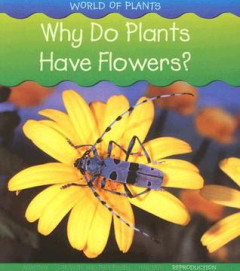
Why do plants have flowers?
What are flowers for ? Lots of plants grow bright, colorful flowers. Flowers make seeds. Seeds grow into new plants. Plants and animals have young that grow up to be like them. This is called reproduction. Cats have kittens, birds lay eggs, and most plants make seeds.
- Edition
- -
- ISBN/ISSN
- 9781403473639
- Collation
- 32 pages : illustration ; 22 cm
- Series Title
- World of plants
- Call Number
- 582 SPI

Phonics teacher's book
The Phonics Teacher's Book is designed for use with Phonics Pupil Books 1, 2, and 3. Together these books provide a thorough programme for the first year of teaching reading and writing. The Phonics Teacher's Book provides a detailed introduction to the Jolly Phonics teaching method and offers a set of structured daily lesson plans, which correspond to the daily activities in the Phonics Pup…
- Edition
- -
- ISBN/ISSN
- 9781844141760
- Collation
- 184 pages : illustration ; 29 cm
- Series Title
- Jolly Phonics
- Call Number
- -

A. Lincoln and me
Skinny as a beanpole and tall for his age, an awkward young boy learns that Abraham Lincoln was called "gorilla, baboob, backwards hick." Yet along with big feet and big hands, Lincoln had a big heart and the great ability to keep a nation together. And what the boy learns as he studies Lincoln opens his mind to great possibilities for his own future.
- Edition
- -
- ISBN/ISSN
- 9780439862776
- Collation
- 32 pages : illustration ; 27 cm
- Series Title
- -
- Call Number
- B
 Computer Science, Information & General Works
  Philosophy & Psychology
  Religion
  Social Sciences
  Language
  Pure Science
  Applied Sciences
  Art & Recreation
  Literature
  History & Geography